

- This event has passed.
Reporting workshop in Gothenburg
June 11 @ 10:00 - 17:00
In Software Center, companies and universities work together to accelerate the adoption of novel approaches to software engineering. The reporting workshop takes place twice a year, in June and December.
This event aims at sharing results from research and cooperation within Software Center, including activities in the competence center CoDig, hosted by Software Center.
The agenda for the reporting workshop ranges from keynote presentations to in-depth sessions for themes and projects. The cooperation between academia and companies in Software Center creates the software engineering success stories that industry needs.
Registration:
Please register at this link: https://forms.gle/sCs7V1g4uih5Zxhu5
Teams link:
If you can´t join us in Gothenburg, please join us over Teams:
Microsoft Teams-möte
Mötes-ID: 397 089 521 950 101
Lösenord: Gi2NE24M
_____________________________________________________
Agenda:
09.30 – 10.00: Registration and coffee
10:00 – 10:30: Opening: Jan Bosch
10.30: Defining Volvo Cars Next Generation SW&EE-platform
Industrial keynote presentation by Martin Hiller, Solution Architect – Software & Electronics Platform at Volvo Cars
The automotive industry is in the most profound transformation since its inception, with the move towards software-defined vehicles. What should the underlying SW & EE platform look like to support this transition? This talk explores how fundamental software design principles be applied to the greater SW&EE system architecture.
11:15 – 11:45: Community updates and introduction to poster session:
- Theme 1: Kristian Sandahl & Daniel Varro, Linköping university
- Theme 2: Jan Carlson, Mälardalen University
- Theme 3: Miroslaw Staron, University of Gothenburg
- Theme 4: Helena Holmström Olsson, Malmö University
11.45 – 12.30: Poster & mingle session
12:30 – 13:15 Lunch break (lunch at own expense)
13:15 – 13.25: The growing Software Center project portfolio:
- Continuous compliance: Jan Bosch
- AutoEvolve – an introduction: Jan Bosch – Chalmers, Mikael Sjödin – Mälardalen University, and Per Runeson – Lund University
13:35 – 15.10: Parallel tracks (incl coffee break)
- Theme 1 & 2: Software Quality Assurance with or without Human Involvement
Organizers: Kristian Sandahl & Daniel Varro, Linköping university, Jan Carlson, Mälardalen University- 13:35-13:55: Why Should We Trust This Test? Human-AI Argumentation in Test Automation – Speaker: Eduard Paul Enoiu, MDU
AI can generate tests, but trustworthy automation requires reviewable artefacts not just plausible outputs. This talk presents test design arguments as the missing middle ground between test classification, requirements traceability and assurance. Each AI produced test can be made more reviewable through an explicit goal, claim, reason and evidence, enabling humans and AI to collaborate not only on generating tests but on continuously evaluating the quality of the reasoning behind them. - 13:55-14:15: Quality Assurance for ML Notebooks – Speaker: Willem Meijer, LiU
Machine-learning software differs fundamentally from traditional software in development practices, organizational roles, and strong dependency on training data. However, software quality assurance (QA) aiming to ensure robustness, maintainability, and functional correctness is much less established than those for engineering traditional software.In this project, we explore how static analysis can be enhanced by (i) leveraging run-time information available in notebooks, and (ii) exploring and evaluating algorithmic choices and data-processing steps in ML pipelines with (aggregated) properties of the datasets used for training and evaluation. - 14:15-14:35 Get coffee
- 14:35-14:55: A Replicated Investigation on the Non-functional Quality Characteristics of LLM-generated Code – Speaker: Kristian Sandahl, LiU
To obtain a more complete understanding of model capability in software engineering tasks, this study investigates the non-functional quality of patches generated by different generations of LLMs on the SWE-bench Lite. The goal is to examine whether improvements in functional correctness are accompanied by improvements in engineering quality. Specifically, we apply different static analysis tools to functionally correct patches to identify potential non-functional quality issues. We also use aggregate quality indicators to assess how these patches affect the code health of the target files. In addition, we monitor the execution time and peak memory usage of the benchmark test suites after applying each patch, and use these measurements as proxy indicators of dynamic performance. - 14:55-15:10 Discussion an closing
- 13:35-13:55: Why Should We Trust This Test? Human-AI Argumentation in Test Automation – Speaker: Eduard Paul Enoiu, MDU
- Theme 3: Miroslaw Staron, University of Gothenburg
-
- 13.35 – 13.50: Wilhelm Meding – Agentic 3GPP requirements
- 13.50 – 14.10: Nataliya Berbyuk Lindström / Arvid Lunde – GROW
- 14.10 – 14.30: Srijita Basu -Can AI Agents Handle Vulnerabilities? Lessons from a Role-Based Security Workflow
- 14.30 – 14.50: Vasili Mankievich – Waise
- 14.50 – 15.10: Bengt Haraldsson – Maintainability
-
- Theme 4: Building Systems That Learn, Adapt, and Grow:
Helena Holmström Olsson, Malmö University, and Jan Bosch, Chalmers:We are entering a new era in which software is no longer something we simply build and maintain — it is something that learns, adapts, and grows.In the session, we explore the possibilities of learning systems, i.e., systems that use data and AI, feedback, and automation to improve continuously, respond intelligently to their environment and create lasting value that also improves over time. The session will look beyond today’s development practices and toward a future where products become more capable the more they are used and where organizations move beyond static products toward continuously evolving products and services.For practitioners, this is not only a technology shift but a strategic opportunity. Learning systems can help organizations respond faster to changing customer needs, improve quality continuously, and create products that become more valuable the more they are used. At the same time, they raise important questions about trust, governance, safety, and how much autonomy can be delegated to the system itself. This workshop offers a concrete, forward-looking discussion about how to build, operate, and scale systems that learn — and what that means for real-world engineering teams today.The session includes short presentations from researchers in the area of AI engineering and from practitioners from the Software Center companies. The presentations are used to set the scene and to offer examples of current practices. Following these, there will be ample time for discussions.
15.15: Multi-Agentic Software Engineers
Keynote presentation by Miroslaw Staron, University of Gothenburg & Chalmers
In 2024, AI has helped software engineers to write programs. In 2025, it helped software engineers design and develop software. In 2026, multi-agentic systems solve complex tasks with or without the intervention of software engineers. In this talk, we will look at how fast generative AI disrupted software engineering and we will reflect on how to prepare for the next couple of years.
15.45: Towards an awesome AI-driven future for Software Engineering: Presentation and fishbowl discussion
16.00 – 16:30 Plans, reflections & closing: Jan Bosch
Speakers:
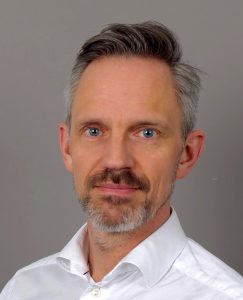 |
Martin HillerMartin Hiller is Technical Leader in Logical Design and Software Architecture at Volvo Cars, and is currently working with the fundamentals of the SW & E/E architecture for future vehicles as well as the definition of Volvo Cars’ software factory. Martin studied Computer Science and Engineering at Chalmers University of Technology and earned his PhD in 2002. He started his career as software engineer at Volvo Group, then moved to ESA/ESTEC, before joining Volvo Cars in 2015. |
|
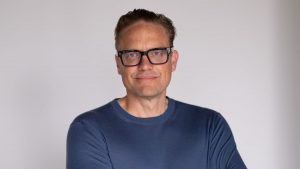 |
Henrik Green, EinrideHenrik Green, General Manager Einride Autonomous Technology We are a company built on software from the start, with people who have worked with software throughout their careers. That gives us a strong and efficient foundation. Going forward, we’re not looking for standards. We’re looking for the forefront of what is possible. |