

- This event has passed.
Reporting workshop in Lund
June 10 @ 09:00 - 15:30
In Software Center, companies and universities work together to accelerate the adoption of novel approaches to software engineering. The reporting workshop takes place twice a year, in June and December.
This event aims at sharing results from research and cooperation within Software Center, including activities in the competence center CoDig, hosted by Software Center.
The agenda for the reporting workshop ranges from keynote presentations to in-depth sessions for themes and projects. The cooperation between academia and companies in Software Center creates the software engineering success stories that industry needs.
Registration:
Registration closed June 1st.
Place:
On June 10th the Software Center Reporting workshop will be hosted by Axis Communications in Lund. Directions >>
Agenda:
08:30 – 09:00 Registration and coffee
09:00 – 09:10: Opening: Helena and Vangel
09:10 – 09:30: Software Center and the Awesome AI-driven Future for Software Engineering: Jan Bosch
09:30-10:15: Opening keynote: From the past to the future of Software Center: Industrial keynote presentation by Baldvin Gislason Bern, Axis Communications
What has it been like to be part of Software Center for over a decade? And where will we be a decade from now? Baldvin Gislason Bern will share his experiences from Axis in Software Center, from the early days of Stairways to Heaven and look into the future where we might be heading.
10:15 – 10:45: Theme updates: Kristian Sandahl, Jan Carlson, Miroslaw Staron & Helena Holmström Olsson
10:45 – 11:00: Systems Engineering community update: Magnus Timmerby, Tetra Pak
11:00 – 11:45: Poster and mingle session
11:45 – 12:30: Lunch (while continuing with the poster and mingle session)
12:30 – 12:45: External funding initiatives (Malin Rosqvist)
12:45 – 14:15: Breakout sessions (including coffee)
- Track 1: Software Quality Assurance with or without Human Involvement
- Track 2: How agentic are you? – The Future of Software Engineering
- Track 3: Building Systems That Learn, Adapt, and Grow
Breakout track 1: Software Quality Assurance with or without Human Involvement
Organizers: Kristian Sandahl, Dániel Varró, Jan Carlson
13:15-13:35: Biases on Software Reviews in Testing
Speaker: Jean Malm, MDU
Reviews and testing are quality practices shaped by both human judgment and the use of automated tools. Based on survey results, interviews and experiment findings, this talk explores how different factors can influence what reviewers and test practitioners do. We discuss how reviews are widely valued despite variations in practices and how making bias visible can potentially help teams improve both review and testing practices.
13:35-13:55: Quality Assurance for ML Notebooks
Speaker: Willem Meijer, LiU
Machine-learning software differs fundamentally from traditional software in development practices, organizational roles, and strong dependency on training data. However, software quality assurance (QA) aiming to ensure robustness, maintainability, and functional correctness is much less established than those for engineering traditional software.
In this project, we explore how static analysis can be enhanced by (i) leveraging run-time information available in notebooks, and (ii) exploring and evaluating algorithmic choices and data-processing steps in ML pipelines with (aggregated) properties of the datasets used for training and evaluation.
14:05-14:25: A Replicated Investigation on the Non-functional Quality Characteristics of LLM-generated Code
Speaker: Kristian Sandahl, LiU
To obtain a more complete understanding of model capability in software engineering tasks, this study investigates the non-functional quality of patches generated by different generations of LLMs on the SWE-bench Lite. The goal is to examine whether improvements in functional correctness are accompanied by improvements in engineering quality. Specifically, we apply different static analysis tools to functionally correct patches to identify potential non-functional quality issues. We also use aggregate quality indicators to assess how these patches affect the code health of the target files. In addition, we monitor the execution time and peak memory usage of the benchmark test suites after applying each patch, and use these measurements as proxy indicators of dynamic performance.
Breakout track 2: How agentic are you? – The Future of Software Engineering
Miroslaw Staron, University of Gothenburg
Multi-agentic Software Engineering is already in place and many companies use them extensively. So extensively that the amount of money paid to AI providers is in parity to 30% of the team. The trend is only increasing, and we will see more software, better software, and cheaper software developed by AI. Therefore, we need to prepare for this new reality and create organizational models that allow us to increase competitiveness tenfold.
In this session, we will interactively discuss how modern software engineering should look like in the era of AI. We will use Mentimeter to guide the discussion and exchange of experiences.
Breakout track 3: Building Systems That Learn, Adapt, and Grow
Helena Holmström Olsson & Jan Bosch
We are entering a new era in which software is no longer something we simply build and maintain — it is something that learns, adapts, and grows.
In the session, we explore the possibilities of learning systems, i.e., systems that use data and AI, feedback, and automation to improve continuously, respond intelligently to their environment and create lasting value that also improves over time. The session will look beyond today’s development practices and toward a future where products become more capable the more they are used and where organizations move beyond static products toward continuously evolving products and services.
For practitioners, this is not only a technology shift but a strategic opportunity. Learning systems can help organizations respond faster to changing customer needs, improve quality continuously, and create products that become more valuable the more they are used. At the same time, they raise important questions about trust, governance, safety, and how much autonomy can be delegated to the system itself. This workshop offers a concrete, forward-looking discussion about how to build, operate, and scale systems that learn — and what that means for real-world engineering teams today.
The session includes short presentations from researchers in the area of AI engineering and from practitioners from the Software Center companies. The presentations are used to set the scene and to offer examples of current practices. Following these, there will be ample time for discussions.
14:15 – 15:00:
Closing keynote: From Data to Trustworthy Autonomy, Engineering the Next Generation of AI-Driven Systems by Sahar Tavili, Head of Verification & Validation for Autonomous Systems at Einride and Docent (Associate Professor) in AI Industrial Systems at Mälardalen University
As artificial intelligence becomes deeply embedded in industrial and safety-critical systems, the central challenge is no longer model performance alone, but the ability to engineer trustworthy, adaptive, and governable AI-driven systems at scale. This talk provides a forward-looking perspective on how leading organizations are transitioning from fragmented data initiatives to end-to-end AI-enabled decision systems. Drawing on industrial experience in autonomous transport and large-scale software systems, Sahar Tahvili outlines how data, machine learning, and software engineering must converge to deliver robust, auditable, and continuously improving systems. The talk highlights key enablers for the next generation of AI systems, including continuous verification and validation, uncertainty-aware decision-making, human-in-the-loop governance, and regulatory alignment. It further explores how organizations can operationalize AI in complex environments while maintaining safety, compliance, and trust.
15:00 – 15:30: Closing and goodbye!
Speakers:
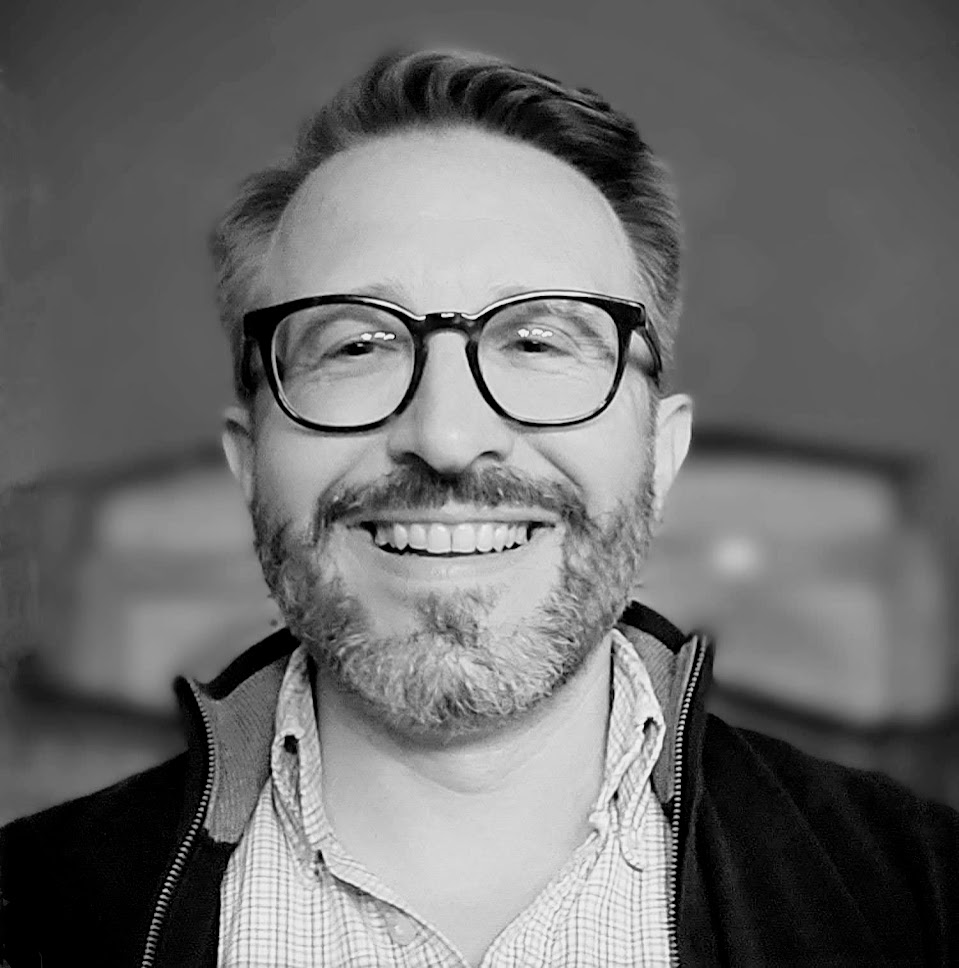 |
Baldvin Gislason Bern, Axis CommunicationsBaldvin Gislason Bern is an Expert Engineer at Axis Communications, where his current focus is software compliance. Baldvin’s career spans over 20 years and includes international API standards, secure development practices and large scale embedded software development. |
|
 |
Sahar Tavili, EinrideSahar Tahvili, PhD is Head of Verification & Validation for Autonomous Systems at Einride and a Docent (Associate Professor) in AI Industrial Systems t Mälardalen University. She brings extensive experience in leading AI-driven transformation across industrial and safety-critical domains. Prior to Einride, she worked at Ericsson, where she developed patented solutions for energy optimization in cloud-native telecom infrastructures currently deployed in production. Her work focuses on trustworthy AI, autonomous systems, and scalable AI-driven quality control, with a strong emphasis on bridging cutting-edge research and real-world deployment. Sahar is the author of an industry-recognized book on software testing and AI optimization, published by Elsevier, and serves as a guest editor and keynote speaker at leading international conferences. Her research and leadership focus on enabling safe, auditable, and high-performance AI systems in complex industrial environments. |